Our Impact
NCJC’s work is grounded in data and driven by a commitment to strengthening juvenile court advocacy in Nebraska and beyond. Through ongoing evaluation and feedback, we measure how our programs improve outcomes for children and families while expanding access to justice, especially in underserved communities.
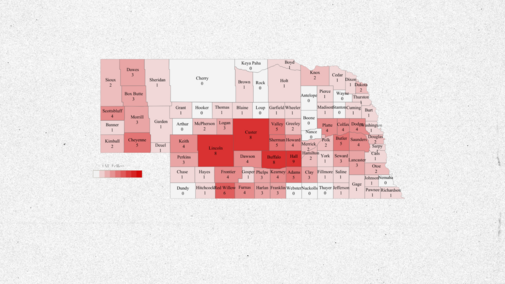
Since launching the Children’s Justice Attorney Education (CJAE) Fellowship, NCJC has trained attorneys now serving 77 of Nebraska’s 93 counties—significantly increasing access to qualified juvenile court counsel in rural areas. At the same time, Children’s Justice Clinic students advocate for hundreds of children each year, building the skills and values of client-centered advocacy.
Map of Nebraska showing number of CJAE Fellows by county in 2025, ranging from 0 to 9, with higher concentrations in central and eastern counties
The Children’s Justice Attorney Education (CJAE) Fellowship is designed to strengthen the quality of legal advocacy for children and families across Nebraska. By investing in attorneys serving rural and underserved communities, the program helps close critical gaps in representation and support more consistent, high-quality outcomes statewide.
Our Research
In addition to program evaluation, NCJC is building a research and data infrastructure to inform practice, shape policy, and support national replication of our model. Our initiatives include:
- Ongoing analysis of program outcomes and participant growth
- Development of a dashboard to assess the availability of high quality juvenile court counsel across Nebraska
- Research collaborations to study rural justice gaps and trauma informed legal practice
- Dissemination of findings through publications, presentations, and partnerships
We welcome attorneys, policymakers, and researchers who share our mission to reach out and explore opportunities to collaborate, support our work, or benefit from our findings.